
Plenty of players can finger a dominant seventh shape but struggle to make it sound intentional. Today we’ll fix that with one chord: the dominant built on B—the classic V7 that pulls powerfully toward E. If you’ve ever wondered why this sound is everywhere in blues, pop, and jazz, or how to use it without clunkiness, this guide is for you. For clarity, the chord symbol is B7.
What it is and why it works
Spell it out: B–D#–F#–A. The two most important tones are the third and seventh (D# and A). They form a tritone—the engine that creates tension. That tension wants to resolve to E because:
- D# (the leading tone) rises to E.
- A (the dominant seventh) falls to G# in E major or to G natural in E minor.
Think of this chord as “V7 of E.” Whenever your song gravitates toward E—whether you’re in E major, E minor, or using E temporarily—you can deploy the dominant on B to create lift and direction.
See the shape (piano)
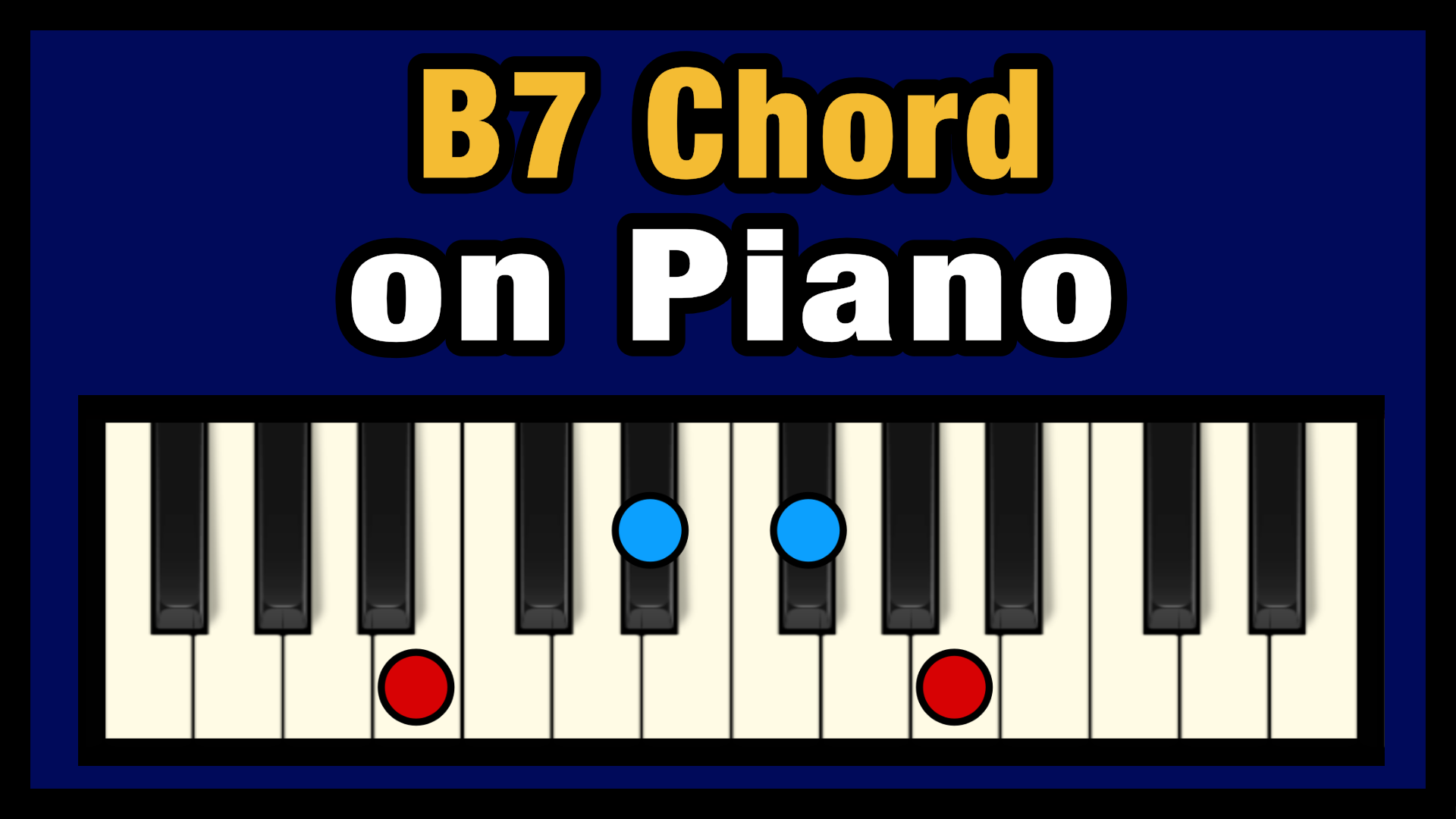
Here’s a clear diagram of the chord on piano. Start simple: play B in the left hand and stack D#–F#–A in the right. Then experiment with moving the right-hand notes around while keeping D# and A close together.
Guitar and piano voicings that sound good immediately
Piano
- Basic: LH B; RH A–D#–F# (7–3–5). Keep 7 and 3 tight for more bite.
- Rootless (band setting): RH A–C#–D#–F# (7–9–3–5). Let the bass handle the root.
- Spicy: RH A–C–D#–F# (7–b9–3–5). That b9 (C) screams “resolve me!”
Guitar
- Open staple: x21202. Rings clearly in folk, country, and blues.
- Compact movable: 7x787x (low to high). Strong mid-voicing; mute the outer strings.
- Bluesy color: 7x777x (adds a 6/13 flavor by doubling F#). Great for shuffles.
Pro tip: in both instruments, prioritize the 3rd and 7th. If you must drop notes, drop the 5th first, then the root (when a bassist is present). The ear will still hear the harmony because of the tritone.
Progressions that love this dominant
1) E major or E minor cadences
Classic motion: dominant to tonic. Try these:
- Pop ballad cadence: | B7 | E |
- Minor flavor: | B7 | Em | (A falls to G natural; deliciously moody)
- Add the IV before resolving: | A | B7 | E | for a touch of lift
2) 12‑bar blues in E
This chord anchors bars 9–10 in the standard form:
- | E7 | A7 | E7 | E7 |
- | A7 | A7 | E7 | E7 |
- | B7 | A7 | E7 | B7 |
On bar 12, use a tight voicing with b9 (C) if you want the turnaround to pop before looping.
3) Secondary dominant in A major
In A major, this chord can point to E (the V of A): | B7 | E | A |. You’ve just used a secondary dominant (V/V to V to I). It injects forward motion without changing key.
4) Tritone substitution
Swap the chord for its tritone partner: F7. Why? D#–A (the tritone) maps to A–E in F7, giving similar tension. Try | F7 | E | for a jazzy half‑step slide.
Voice‑leading: make the resolution inevitable
Think in lines, not blocks. Aim each chord tone deliberately:
- D# → E (up by semitone)
- A → G# (down by semitone in E major) or → G (down in E minor)
- F# → E (down a whole step) or → G# (up a minor third) depending on color
Now add a bass that outlines the drama. Try a chromatic walk: B–C–C#–D# → E. If you’re in a band, let the bass lay that out while comping a compact voicing around D# and A.
Color tones and when to use them
- b9 (C): the classic “resolve me now” signal. Use in jazz, dramatic filmic pop, or transitional bars.
- #9 (C##/D): edgier, Hendrix‑approved. Works over blues rock vamps before landing on E.
- 13 (G#): adds sweetness; nice in ballads or gospel‑leaning contexts.
- b13 (G): darker hue; reserve for minor targets or moodier sections.
Don’t stack all colors at once. Choose one or two that support the melody and the moment.
Common mistakes (and quick fixes)
- Playing big block shapes with no direction. Fix: reduce to the 3rd and 7th; move each by step to the next harmony.
- Always doubling the root. Fix: in ensembles, drop the root and let bass own it; you’ll sound clearer.
- Ignoring melody. Fix: place color tones (b9, 13) above the melody or avoid clashing with it.
- Resolving only to E major. Fix: also practice resolutions to E minor and to E‑flavored chords like E6 or Eadd9.
Try this turnaround
Set a slow groove and loop: | E | C#m7 | F#m7 | B7(b9) | → | E |. Keep the top note moving E–F#–G#–A and notice how the final chord begs to resolve.
A focused 7‑day practice plan (15 minutes a day)
- Day 1 – Shapes: Learn two voicings on your instrument (compact and open). Say the chord tones aloud.
- Day 2 – Resolution drills: Alternate one bar of the dominant with one bar of E and Em. Aim the 3rd and 7th inward by semitone.
- Day 3 – Blues: Comp the last four bars of a 12‑bar in E. Record yourself and listen for clarity on bars 9–12.
- Day 4 – Secondary dominant: Practice | A | D | G | C | style chains but starting on E→A with the dominant on B pointing to E first. Internalize the sound of temporary tonics.
- Day 5 – Colors: Add b9 and 13 selectively. Play one chorus clean, one chorus colored, and compare tension.
- Day 6 – Tritone sub: Swap with F7 and slide by half‑step into E. Keep the comp light and rhythmic.
- Day 7 – Song integration: Choose a tune in E (or that touches E). Replace a plain V with your best voicing and record a verse/chorus.
Arranging tips for bands
- Bass: Outline B on beats 1 and 3, approach E chromatically on 4. Keep it simple; let the harmony speak.
- Keys/Guitar: Use two different voicings—one with the 3rd on top, the other with the 7th on top—to avoid doubling and mud.
- Vocals/Horns: Land on C (b9) briefly if the melody tolerates it, then melt to B or D# as you resolve. It’s a tiny dissonance with big payoff.
Quick audit before you hit record
- Can you hear the tritone (D#–A) clearly?
- Does at least one voice move by semitone into E?
- Did you choose color tones that support the melody, not fight it?
- Is your bass line guiding the ear toward the target chord?
Mastering this dominant isn’t about learning yet another shape—it’s about learning to point, to promise, and to deliver. Focus on the 3rd and 7th, shape tiny voice‑leading moves, and choose one color that fits the moment. Do that, and this chord will stop feeling like a hurdle and start sounding like a storyteller.
